Interview by Krisztina Géczi
Alexa Bandura, leader of the McDaniel Art Club, is a junior student majoring in Psychology with minors in Marketing, Economics, and Art Therapy. We have sat down to have a chat about her motivation, love of art, and experience that comes with creating a club. She shares with us that she started the Art Club, “for art students and non-art students to have fun, create, and have a detox time in everyday stressful life”.
Her club, established two years ago in the Fall of 2024, brought a new and welcoming environment that enhanced student life on campus. She bravely wandered into a new territory, wanting to create a space where students could socialize and “find people who have similar interests”. She admits that her love for the workshops she attends around the world inspired her to take that step. As a psychology student, she naturally wanted to “gain more experience leading group work.”
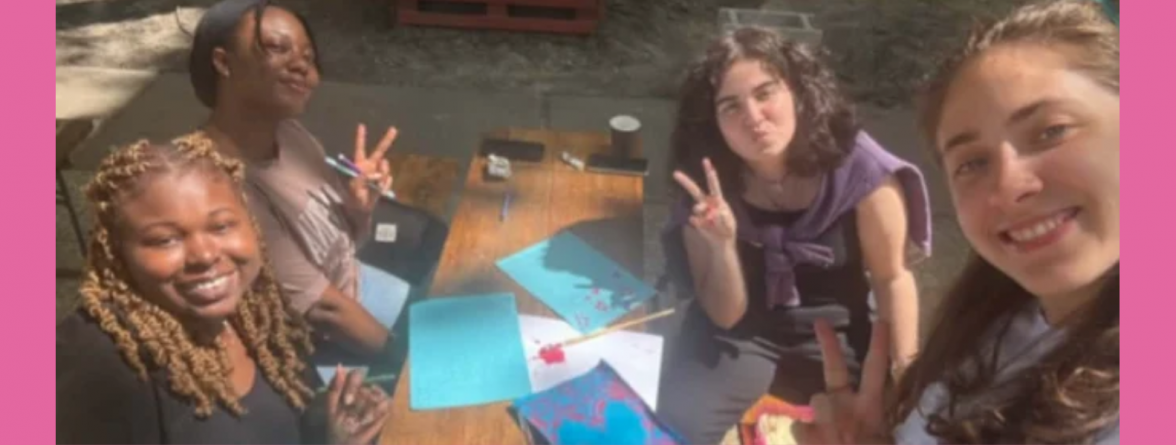
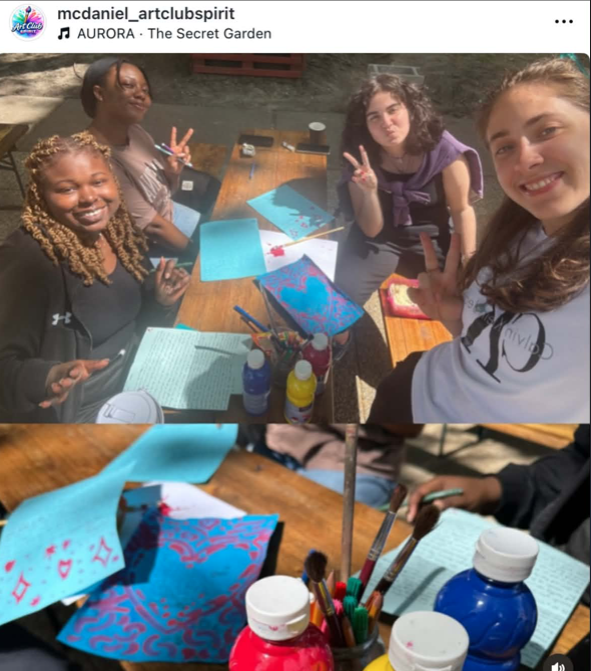
Alexa, let us know what an Art Club session looks like for those who are out there, curious, and deciding whether to join. “Sessions are different every time, with a new subject, a theme, or a topic. There are things like Valentine’s Day postcards making or Christmas decorations crafting.” But this is only the art side of it; she tries to connect it with therapy based on hours of research she devotes to her passion, so “sometimes there are more introspective questions with background music and a group discussion after that”. She also emphasizes the importance of “talking honestly about everyday life with a deeper understanding of each other and oneself”.
She traces her creativity back to early childhood, when, at just four or five years old, she spent time at home with her grandmother. Together, they would bring plates from the kitchen, trace around them, and create mandalas. “Honestly, I always liked colors,” she recalls. Later, her mother gifted her first painting kit, encouraging that growing fascination with art. At school, a highly creative art teacher nurtured her imagination further through unique exercises and projects. Creativity also ran in the family: her father learned woodworking and became a cabinet maker, something she believes quietly influenced her own artistic path.
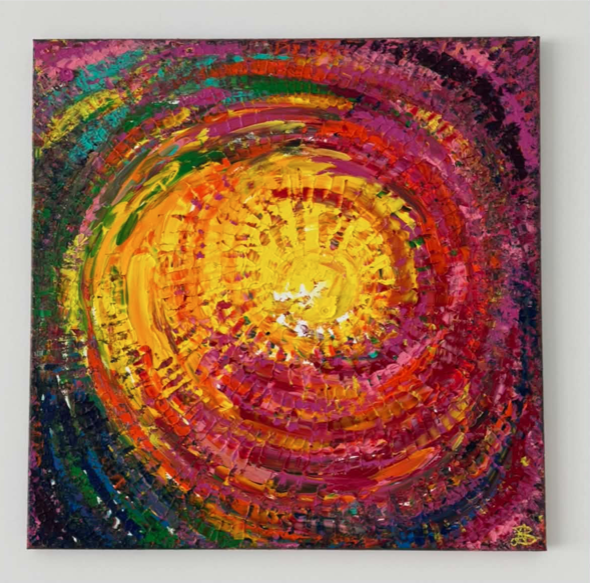
“Love after War” 120 x 120 cm, acrylic on canvas – Axlo Freefall
She describes her work as mostly abstract, usually created with acrylic paint, while also experimenting with mixed media and different textures. “I’m not a realist,” she says, explaining that she is drawn instead to “impressionism and anything fantastical — hippy colors, energy, and feelings.”
One idea she learned in high school continues to shape her understanding of art: “If from the start you know what the outcome will be, it is not art.” For her, art must be personal, something that “speaks to your soul and can speak to others.” She believes true art cannot be replicated in exactly the same way twice. When asked about what art means to her, she revealed that creating also serves as a form of healing during difficult moments in her life. “After it, I feel better,” she admits. “It’s a way for me to cure and nourish myself.”
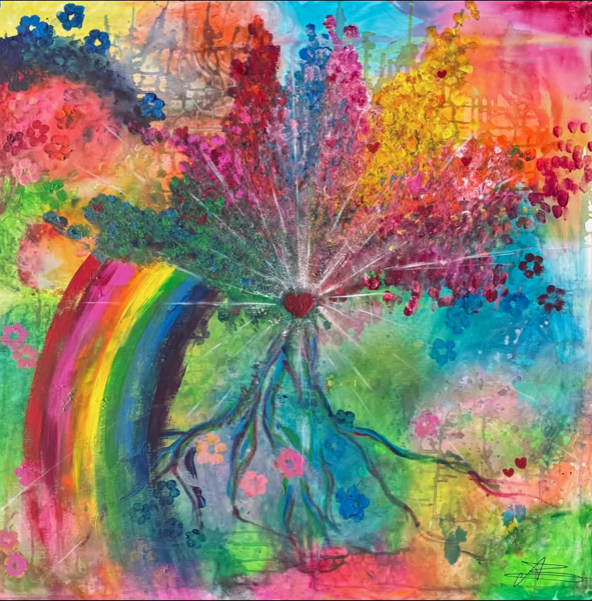
“Movement”, 50 x 50 cm, acrylic on canvas – Axlo Freefall
The most important goal of the art club, she explains, is to help students feel less stressed in today’s fast-paced world. “Even if there is only one person coming in for the session, it is already a success,” she says. To increase involvement, she promoted the club through posters, Instagram, and direct conversations with students, while also receiving support from the SAC (Student Advisory Council). In the future, she hopes to host workshops and expand events beyond campus.
Although nowadays she feels more introverted, she says community is still essential to her. “I need community,” she admits. “I need to feel that I am doing something for society.” Inspired by artists on social media and by her father, who turned woodworking into a career, she believes passion can become purpose. At the same time, she recognizes that not everyone has the privilege to focus on art. “Art is the soul and heart of life,” she says, but adds that people struggling to meet their basic needs often cannot invest in creativity. Because of this, she believes art therapy can play an important role in helping people heal, including children growing up in war zones and soldiers returning from conflict. 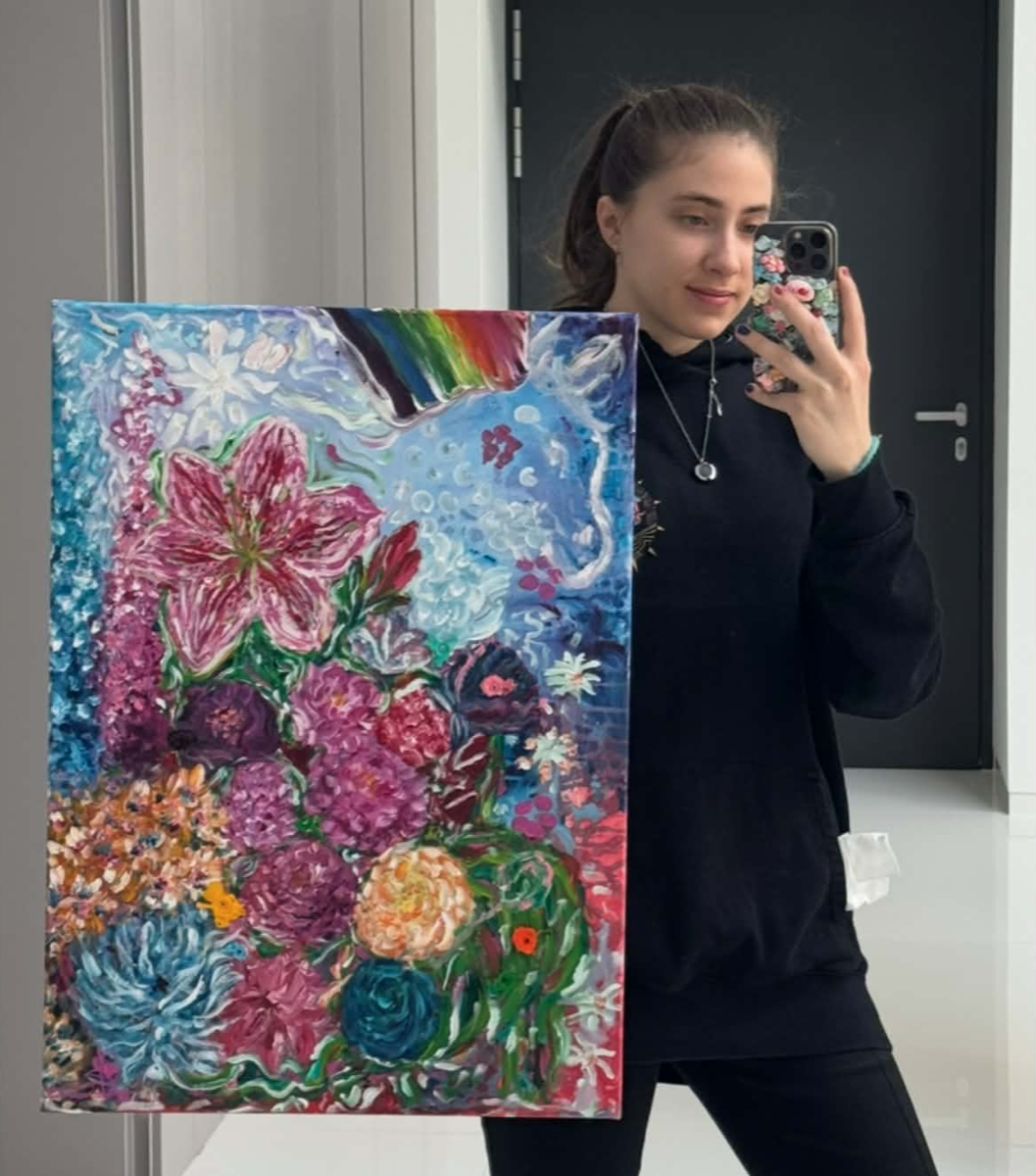 She encourages others to start their own projects: “You will never know until you try. If people don’t show up, it is okay, you are growing, and it takes time.”
Photos by Alexa Bandura