Interview by Julius Hendricks
It was one of those warm Budapest afternoons where the city seemed to slow down just enough for people to enjoy it. The air drifting through the streets carried the smell of blooming trees and cigarette smoke from crowded café terraces, and groups of tourists wandered lazily between sights with coffees in hand. I sat down with Ella Gunter and Kaitlin Krause just before Kaitlin’s shift at Ruin Brew, one of the bars frequented by McDaniel Budapest’s pub crawls. Music played quietly in the background while the remains of snacks and drinks cluttered the table between us. The conversation felt less like a formal interview and more like catching up with friends at the end of a long semester.
Ella, originally from Los Angeles but born in Georgia, transferred to McDaniel after attending community colleges in California, including City College of San Francisco and College of the Canyons. Like many American students who eventually find themselves in Budapest, her path here was not necessarily planned years in advance. “In all honesty, it was the cheapest option to go abroad,” she admitted. McDaniel offered something many European universities could not: access to American financial aid while still allowing students to live overseas.
Ella said the ease of moving to Hungary also appealed to her. “You literally just show up, bring a couple documents, and call it a day,” she joked while comparing the process to more challenging visa processes in other countries.
When asked what stood out most about living in Budapest, Ella talked about the city itself. “I love how tiny and close everything feels,” she said. Unlike Los Angeles, where the city is run by cars and driving dominates everyday life, to Ella, Budapest was designed for movement and interaction. Trams glide through the city every few minutes, metro stations connect nearly every district, and students can walk from cafés to bars to classes within minutes. “You can be almost anywhere in thirty minutes,” she explained.
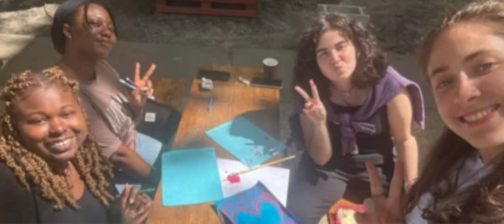
But more than transportation or architecture, what Ella emphasized most was community. She described Budapest as a place where friendships can form naturally. “It’s so much easier to have community here than it is in the States,” she said. Public parks, student events, and walkable neighborhoods create opportunities to meet people in ways that feel rare in the United States. In Los Angeles, she explained, almost every social activity comes with a price tag. “Here there’s so much free stuff to do,” she said. “The parks are so nice, and there are so many public spaces.”
Much of Ella’s reflection centered around independence. Living abroad forced her to become comfortable spending time alone and navigating life without the support systems she had back home. While she first experienced independence while living in San Francisco, Budapest offered stability and confidence. “I feel very independent here,” she said. “It’s given me a sense of confidence in many ways.”
That confidence also came from having her own apartment and routine. She laughed while describing how stress-free life can feel as a student abroad compared to life in America. Without the pressure of working constantly to afford daily expenses, she found herself happier and more relaxed.
When discussing academics, Ella compared McDaniel Budapest to the colleges she attended in California. In some ways, she said, the experience was universal. But she felt that McDaniel’s smaller class sizes created a more personal environment. Some professors left a particularly strong impression on her, especially one literature professor, Molnár, whose classes changed the way she viewed reading and learning altogether. “I learned the most in his classes,” she said. “I didn’t think I’d care that much about literature, but it was so good.”
Psychology courses also shaped her perspective, especially developmental psychology. She laughed while explaining how the class completely changed the way she viewed children and learning. Before taking the course, she admitted she had underestimated how much infants absorb from the world around them. By the end of the semester, she found herself intrigued by childhood development and the psychology of growing up.
Like many students nearing graduation, Ella’s reflections eventually shifted toward the future. After years of moving between cities and countries, she said she’s looking forward to staying in one place for a while. “I think I’m looking forward to just staying in one place for a long time,” she said. Constant movement, while exciting, can eventually become exhausting.
As our conversation wrapped up, students continued to pass outside the café windows while the late afternoon sun settled lower over the city. Listening to Ella describe her years abroad, it became clear that her college experience was shaped by much more than lectures or assignments. It was shaped by trams rattling through Budapest streets, conversations in crowded cafés, long walks through unfamiliar neighborhoods, and the quiet confidence that comes from building a life far away from home. For Ella, college was not simply about earning a degree. It was about learning how to exist independently in the world, and Budapest became the place where that transformation happened.
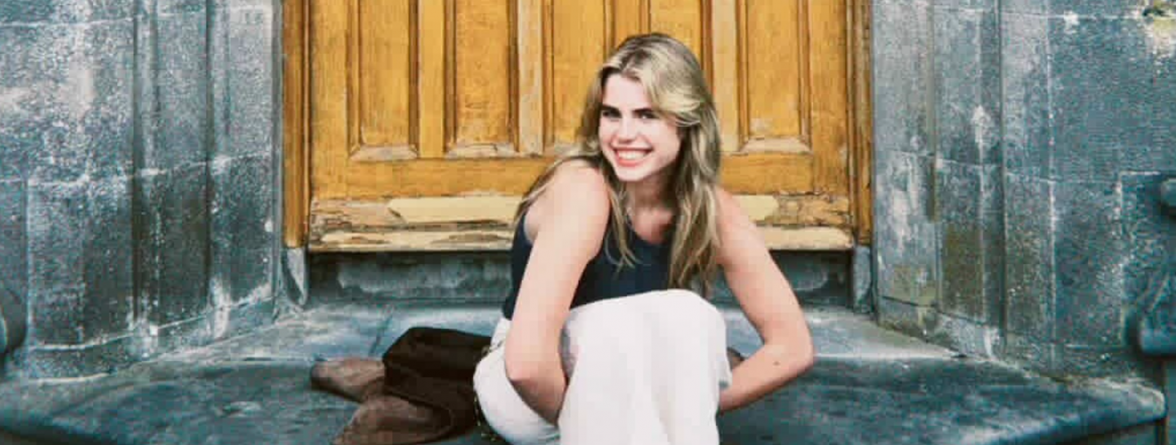
Photo by Ella Gunter